

Eczema is a chronic inflammatory skin condition marked by itching, redness, dryness, oozing, and crusting. It often follows a relapsing course, meaning symptoms can improve and worsen over time.
Many patients ask why eczema occurs and how eczema occurs. In simple terms, eczema develops due to a combination of skin barrier dysfunction, immune system overactivity, and exposure to triggers.
Eczema Symptoms You Should Not Ignore
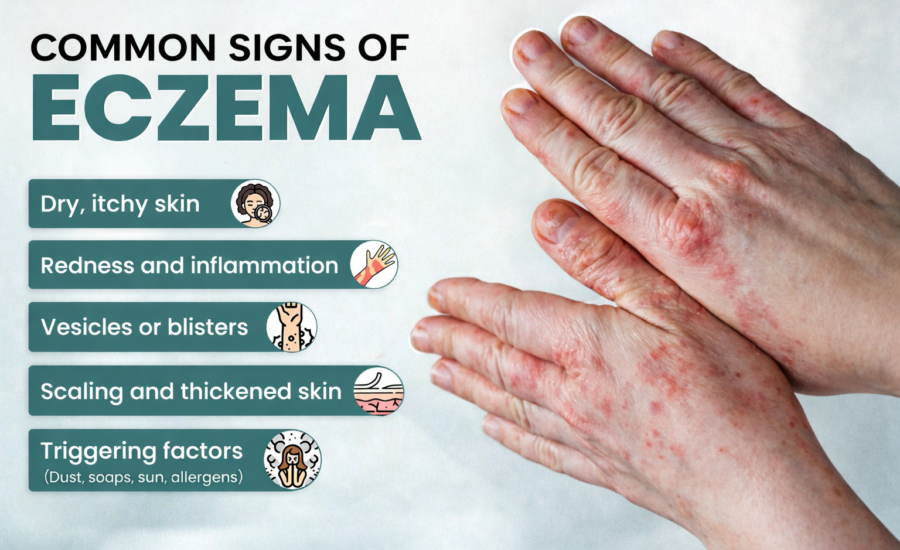
Common eczema symptoms include:
- ♦ Persistent itching (often worse at night)
- ♦ Red or inflamed patches of skin
- ♦ Dry, scaly, or cracked skin
- ♦ Oozing or crust formation during flare‑ups
- ♦ Thickened, leathery skin in chronic cases
Early identification of eczema symptoms helps prevent severe flare‑ups and long‑term skin damage.
Stages of Eczema
Understanding the stages of eczema helps guide treatment decisions:
1. Acute Stage
- Red, swollen plaques
- Tiny fluid‑filled blisters (vesicles)
- Severe itching and oozing
2. Subacute Stage
- ♦ Reduced oozing
- ♦ Persistent redness
- ♦ Scaling and dryness
3. Chronic Stage
- ♦ Thickened skin (lichenification)
- ♦ Darkened skin tone
- ♦ Intense itching due to repeated scratching
What Causes Eczema?
Patients frequently ask what eczema causes, how eczema starts, and eczema causes due to what factors. Eczema is not caused by a single factor but by multiple internal and external triggers.
Common Eczema Causes:
- ♦ Dust, plants, and grass
- ♦ Harsh soaps and detergents
- ♦ Cement and construction materials
- ♦ Chemicals and allergens
- ♦ Sun exposure
- ♦ Climate changes
- ♦ Certain foods (in susceptible individuals)
What Causes Eczema on the Face?
Facial eczema is commonly triggered by:
- ♦ Cosmetic products
- ♦ Fragrances and preservatives
- ♦ Sun exposure
- ♦ Frequent face washing
- ♦ Air pollution
Types of Eczema: Exogenous vs Endogenous
Eczema is a broad term, and based on the nature of the etiological agent, it is classified into exogenous and endogenous. Some of the examples of exogenous eczema and endogenous eczema are given below:
Exogenous Eczema: (caused by external factors):
- ♦ Irritant Contact Eczema: Caused by direct skin contact with irritants like soaps, detergents, or chemicals.
- ♦ Allergic Contact Eczema: Triggered by an allergic reaction to substances such as metals, fragrances, or plants.
- ♦ Infective Eczema: Occurs when existing eczema becomes secondarily infected with bacteria, viruses, or fungi.
- ♦ Post-Traumatic Eczema: Develops in areas of skin injury or repeated friction, leading to chronic inflammation.
Endogenous Eczema: (linked to internal or genetic factors):
- ♦ Atopic Dermatitis: A chronic, relapsing form of eczema often associated with a family history of allergies or asthma.
- ♦ Discoid Eczema: Characterized by coin-shaped patches of inflamed, itchy, and dry skin.
- ♦ Pompholyx: A form of eczema affecting the hands and feet, presenting with small, itchy blisters.
- ♦ Venous Eczema: Occurs in the lower legs due to poor circulation or varicose veins, leading to red, scaly patches.
Eczema Causes and Treatment: Dermatologist‑Recommended Options
Eczema treatment focuses on controlling inflammation, relieving itching, repairing the skin barrier, and preventing recurrence.
1. Corticosteroids (Topical and Oral)
Corticosteroids, oral as well as topical, are the mainstay of the treatment of eczema.
- ♦ Oral corticosteroids such as prednisolone, methylprednisolone, betamethasone, dexamethasone, & deflazacort are regularly prescribed by dermatologists.
- ♦ Topical corticosteroids such as clobetasol and halobetasol are used for thick plaques.
- ♦ Corticosteroids exert anti-inflammatory, anti-proliferative, vasoconstrictive, & immunosuppressive effects.
- ♦ It helps to reduce inflammation.
- ♦ Topically, high-potency corticosteroids such as halobetasol and clobetasol are used to treat the thick plaques of eczema.
- ♦ Low to moderate potency corticosteroids are used in eczema treatment on areas with thin skin.
2. Antihistamines
- ♦ Antihistamines are given as a supportive treatment that helps to reduce itching. Especially during acute flare-ups.
3. Emollients and Moisturizers
- ♦ Emollients containing liquid paraffin and white soft paraffin are frequently prescribed along with topical corticosteroids in eczema treatment.
- ♦ Emollients help to decrease transepidermal water loss and keep the stratum corneum (outermost layer of the epidermis) hydrated.
- ♦ It helps to reduce dryness and itching.
4. Immunosuppressants
- ♦ Other immunosuppressive agents such as azathioprine and cyclosporine are also used in case of recurrences and in case the patient does not respond to oral corticosteroids.
- ♦ Being a practitioner in clinical dermatology, it is advisable to carry out necessary blood investigations before putting patients on this group of immunosuppressants.